I analyzed 14 fertility clinic websites.71% lost visibility in 2025, here's what the data shows.
I analyzed 12 months of traffic data across 14 US fertility clinic websites to understand how patient discovery is changing, and what separates clinics that grew from those that didn’t.
Why I conducted this analysis
Following the rollout of Google’s AI Overviews in May 2024 and ChatGPT’s search experience later that year, many industries began seeing fewer organic clicks as more questions were resolved directly in AI-driven interfaces.
A recent study found that ~60% of searches on Google are now resulting in zero clicks.
This analysis explores whether the same shift is already visible in fertility clinics, where patient discovery, trust, and timing are critical to growth.
What the data revealed
The fertility clinic visibility landscape shifted in 2025. These patterns emerged across the limited but intentionally selected sample of 14 US websites.
-17%
Total traffic decline
71%
Of clinics lost traffic
-19,5%
Organic search drop
21%
Of clinics still grew
Key findings
Market-wide contraction
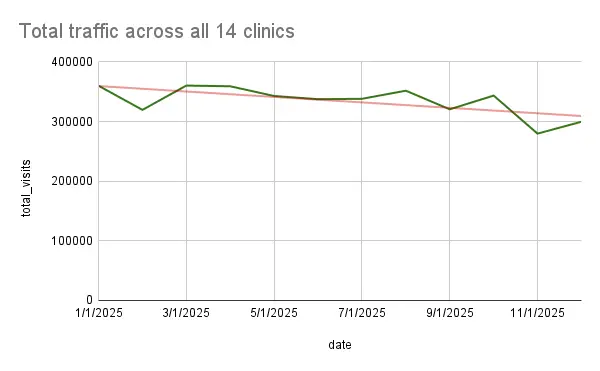
Total traffic across all 14 clinics dropped from 360K monthly visits in January to 300K by December, a 17% decline that affected clinics of all sizes, regardless of brand or scale.
Organic search declined most sharply
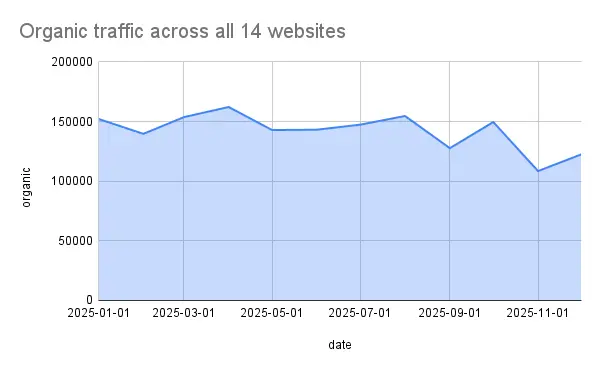
Organic search traffic declined nearly 19.5% during the period. As the primary discovery channel for new patients, this decline had an outsized impact on overall visibility across clinics.
No channel compensated for the decline
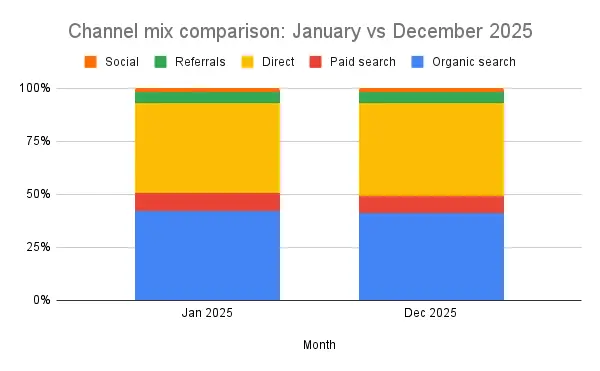
Despite a 17% decline in total visits in 2025, the distribution of traffic sources remained largely unchanged between January and December. This indicates a broad contraction in patient discovery rather than a shift from one channel to another.
Scale wasn’t a safeguard
Large fertility clinic networks declined at rates comparable to smaller practices. Greater scale - more locations, more content, or higher baseline traffic - did not prevent visibility loss during the market shift. Scale helped stabilize demand, but it did not drive growth.
Adaptation was the key differentiator
A small subset of clinics maintained growth in 2025 by actively adjusting how they captured and converted demand during a period of constrained discovery. In contrast, most clinics maintained stable strategies as conditions changed, and saw declining results.
Supporting patterns observed across clinics
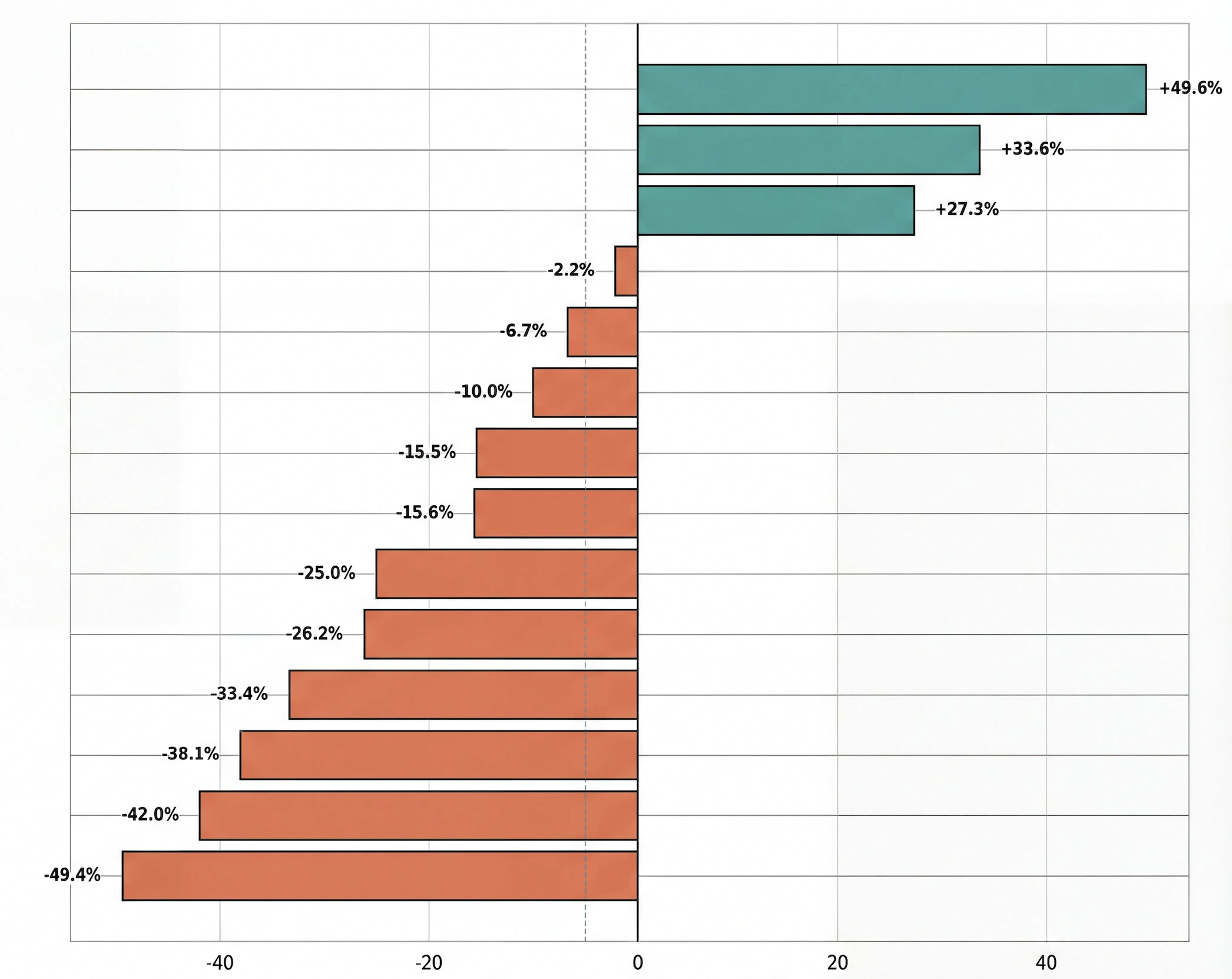
Outcomes diverged sharply across clinics
Traffic performance in 2025 varied widely across clinics. While most experienced declines, a small number achieved growth, even as overall discovery decreased.
This dispersion suggests that market contraction alone does not explain outcomes. Clinics were operating under similar external conditions, yet results differed.
Growth correlated with different traffic composition
Comparing clinics that grew with those that declined reveals differences in how traffic was composed, not just how much traffic existed.
While no single channel offset the market decline, clinics that maintained growth exhibited a more balanced and resilient visibility profile than those that declined.
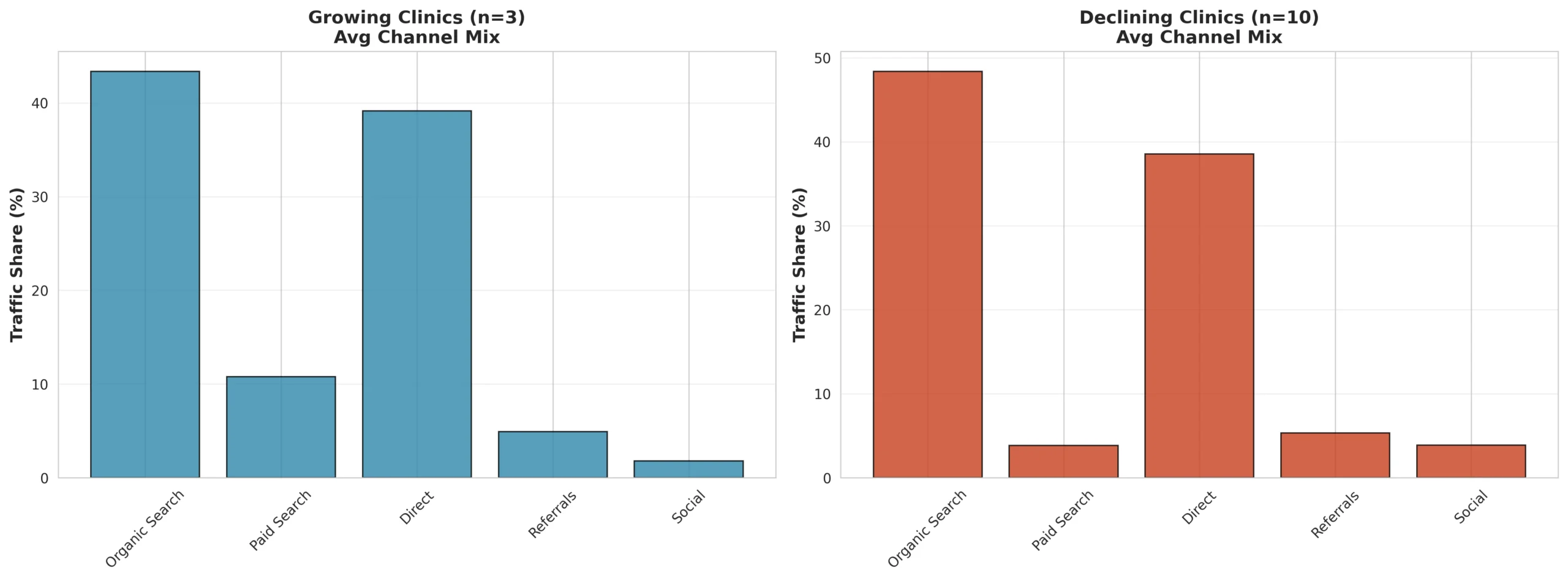
These patterns point to a shift in how fertility clinics need to think about visibility and growth in an increasingly constrained discovery environment.
Implications for fertility clinic leaders
The organic search playbook has changed
A nearly 20% decline in organic search traffic points to a fundamental shift in how discovery happens. The SEO and content approaches that reliably drove visibility for years are now encountering new limits, as patient journeys increasingly begin, and sometimes end, before a clinic website visit occurs.
Inaction carries increasing risk
Most clinics experiencing decline did not significantly change how they approached visibility during this period. As discovery conditions evolved, maintaining existing strategies often meant absorbing the impact rather than mitigating it.
Growth depended on rethinking visibility
Clinics that held up best did not win by executing the same playbooks more efficiently. They recognized that discovery itself was changing, and adapted how visibility intersected with patient intent, rather than relying on marginal gains from established SEO and content strategies.
This shift affects the entire competitive landscape
These patterns reflect a market-wide change, not isolated clinic performance issues. As many clinics continue operating under old assumptions, those who adapt earlier can gain relative visibility, even in a more constrained discovery environment.
Where does your clinic sit in this shift?
As you review these findings, it’s worth considering:
How dependent is your clinic on organic search as a primary discovery channel today?
Have your visibility and content strategies meaningfully changed in the last 12 months?
Do you understand where patients encounter your clinic before they reach your website?
Are you seeing early signals of stabilization, or gradual erosion, in discovery and inquiries?
If organic visibility continues to change, are you prepared for how that affects patient growth?
Most clinics don’t lack effort. They lack a clear, external view of how their visibility compares under today’s discovery conditions.
Get a visibility snapshot for your clinic
This is a short, high-level assessment of how your clinic’s visibility compares under today’s discovery conditions. You’ll leave with a clearer picture of where you’re exposed, and where adaptation may matter most.
Enjoyed this analysis? Share on LinkedIn and help more fertility clinics founders discover these insights.